- Agouè cacavéli, 01 BP. 3574, Lomé-Togo
- reseaucupidonbe@reseaucupidontogo.org
- (+228) 22 55 56 76 / 90 63 04 40
🌍 HIV/AIDS: Journalists made aware of the key populations
HIV/AIDS: Journalists raise awareness about key populations
The project, which benefits from the support of USAID and PEPFAR, has helped strengthen the capacities of journalists on effective media coverage of issues related to key populations with a high prevalence of HIV in Togo.
Studies on HIV, the virus is concentrated in certain populations whose prevalence exceeds the national average. Among these populations are key populations.
Indeed, if the average HIV prevalence is 1.7% in the general population, it appears from the reports of the National Center for the Fight against AIDS (CNLS) of 2022, that it is 5.8% among sex workers, 8.8% among men who have sex with men, 3.6% among drug users, 3.8% among prisoners among others.

Bitchatou Agnim Valery, coordinateur du Réseau Cupidon a expliqué :
"Beyond having high HIV prevalence rates as a common point, these key populations are subject to the same challenges: social, political, legal and cultural environments are unfavorable to them."
Better still, it appears that the high prevalence has a direct influence on access to HIV services by the key populations in question.
With a view to ending inequalities and AIDS, in accordance with the global strategy for the fight 2021-2026, and in line with the national strategic plan 2023-2026, which provides in its axis 3: “to accelerate the elimination of gender and human rights barriers that hinder access to and continued use of HIV services”, training of journalists on key populations is initiated.
“The media plays a crucial role in raising public awareness and forming opinion. Therefore, it is essential to build the capacities of media professionals so that they can address issues relating to key populations with sensitivity and precision, while avoiding stereotypes and stigmatization,” explained Mr. Bitchatou before adding: “Our goal is to raise awareness and mobilize. We know the power of the media in raising awareness. So it is to create a favorable environment for the implementation of activities among key populations that the Cupid Network said that the media must contribute. This is why we talked about the contribution of the media… Creating a favorable environment means getting people to understand a situation and not be resistant to what other people offer.”
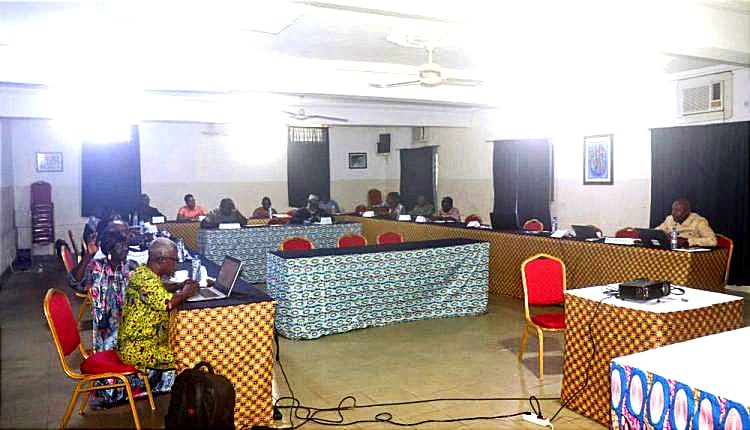
Thus, from August 7 to 9, 2024, the training helped to strengthen the capacities of Togolese media professionals for responsible and effective media coverage of issues related to key populations.
More specifically, it helped to raise their awareness of the specific challenges faced by key populations and to provide them with the appropriate information and documentation for better communication on key populations.
Beyond that, to promote a thorough understanding of human rights, health and development issues and to encourage constructive dialogue and collaboration between the media and civil society organizations.
For Atinèdi Gnasse, one of the trainers, it is important to train journalists so that they can inform well.
” A journalist, when he is informed, can inform better. That is why the Cupid Network wanted to bring them together so that we can give them a certain amount of information or pillars of information… When we talk about MSM (Men having sex with other Men), what we generally call homosexual, the perception of the average citizen towards these people is different while we are here in the field of the right to health… That is why we wanted to make people understand that when we talk about the right to health, no one can believe that he is superior to the other”, before adding that “the journalist must take both perceptions in hand: his perception and the health issues. By putting the two together, he will have no difficulty in informing on the health aspect of all Togolese as prescribed in the Constitution”.
During the three days, journalists are asked to be tolerant in the treatment of information.
@gapola