- Agouè cacavéli, 01 BP. 3574, Lomé-Togo
- reseaucupidonbe@reseaucupidontogo.org
- (+228) 22 55 56 76 / 90 63 04 40
KEY POPULATION PROPOSAL VALIDATION WORKSHOP
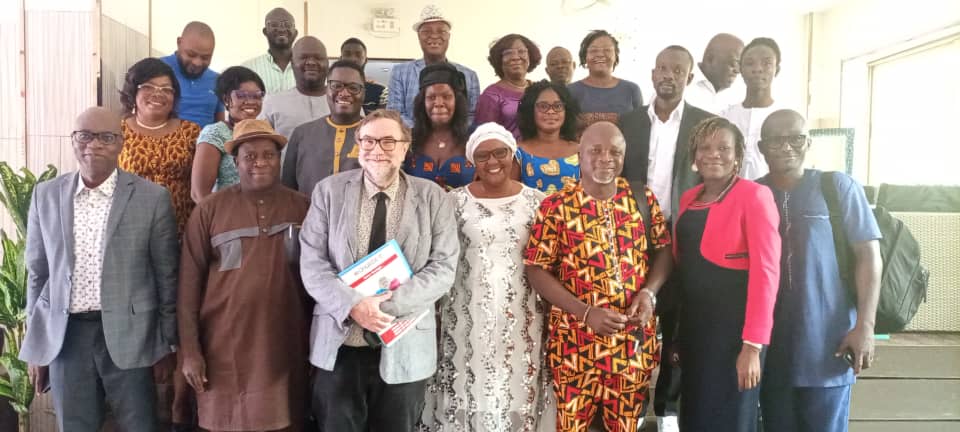
In the year two thousand and twenty-two and on October 6, two thousand and twenty-two, the workshop to validate the proposal of key populations took place on behalf of the drafting of the NFM4 concept note. This workshop, which took place at the Concorde Hotel, aims to carry out a critical examination of the proposal; formulate suggestions and recommendations with a view to enriching the document; and to obtain, through validation, a consensus around the proposal so that it is taken into account in the NFM4.
This meeting brought together the coordination bodies, the resource mobilization and concept note drafting commissions as well as the technical and financial partners, the main leaders of the key population identity organizations, the leaders of the organizations working with key populations, the PLHIV networks and the team coordinating the technical secretariat of the civil society organizations platform.
This activity benefited from funding from USAID.
I-REMINDER OF THE CONTEXT
In order to improve program performance, Togo has adopted the new WHO guidelines and recommendations for programs targeting key populations; This involves the revision or development of policy documents specific to certain innovative interventions, notably the HIV self-testing strategy and guide, the PrEP strategy and guide, the prevention and uptake policy. in charge of key populations in Togo 2020 including the continuum of care for key populations, HIV testing policy and standards including community testing, mapping of interventions aimed at key populations, etc.
As part of a USAID – UNAIDS technical collaboration to support key populations and vulnerable groups, Togo benefits from a fund of 75,000 USD to improve the scaling of these high-impact interventions through a technical assistance mission whose overall objective is to encourage the inclusion of robust proposals from key populations in the NFM4 funding request from the Global Fund, thereby enabling the scaling up of effective interventions targeting.
It is as part of the chronological sequence of planned activities that the CUPIDON network, in collaboration with the platform of civil society organizations, following the validation workshop of September 8 and 9, 2022 which brought together the target itself even, also organized the validation workshop on October 6 which brought together the coordination bodies and the heads of the organizations to have a complete and solid proposal of the interventions to be submitted to the NFM.
II- PROGRESS OF THE SESSION
The session started at 9:10 a.m. with the opening ceremony. Three speeches were made to open the session. Firstly, there is a welcome word from the coordinator of the platform of civil society organizations (CSOs) against HIV/AIDS, then a word from the UNAIDS Country Director Dr Eric VERSCHUEREN and finally a word from from the SP-CNLS-IST coordinator, Professor PITCHE to open the session.
In her words, the coordinator of the platform of civil society organizations welcomed this meeting which is crucial and which will make it possible to validate the interventions which were retained during the Kpalimé workshop. Finally, in her words, she thanked UNAIDS which supports civil society in this process.
The UNAIDS Country Director, for his part, spoke of the various progress made by Togo in the response to HIV and the challenges that remain to be met. “Togo has made remarkable progress this year. Far from the figures we hoped for 10 years ago, Togo is among the countries which have a remarkable score. The challenge is to eliminate HIV as a public health problem. Increase coverage in relation to the indicators with which countries will be assessed. This support is structured around two objectives. The first is to increase the target’s ability to speak up and defend their cause. The second objective is to reflect on the relevant activities that can be included in the NFM4 proposal. On December 15, the FM envelope will be announced. An envelope which certainly will not cover all of the activities. But it is certain that with the work that is being done, the target will be able to speak up when necessary and say what is necessary.” To finish his remarks, the UNAIDS Country Director declared that he hopes that the work carried out by the SP-CNLS-IST, the Platform and civil society will bear fruit.
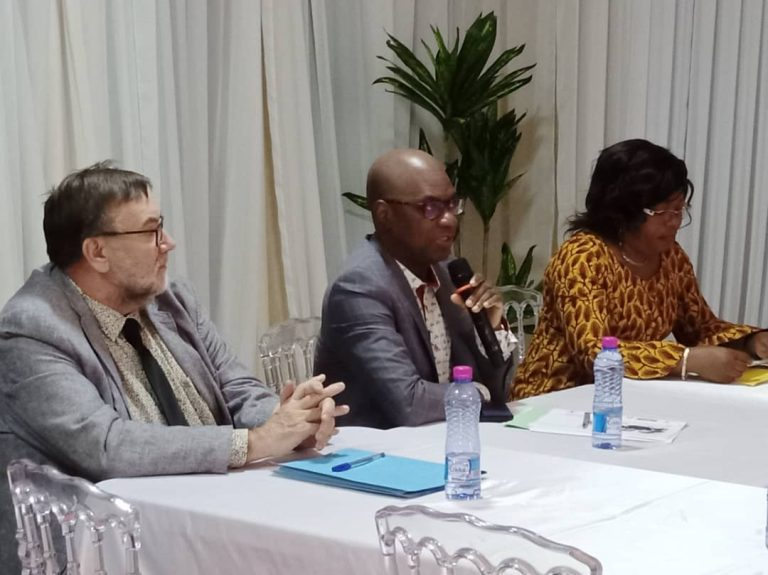
In his opening remarks, the SP-CNLS-IST Coordinator thanked UNAIDS which supports the country in the development of documents and also the continued support of civil society. “This work, which is being done with key populations by UNAIDS, will also be done with adolescents and young people in order to have analytical evidence for the program.” The coordinator also thanked key populations for their involvement in the process a few years ago and congratulated the Platform, the Cupidon network and the AFAZ association for their leadership on key population issues. “The document is good but there will be trade-offs to be made. A study is in
courses on key populations to reveal the real data. But all these activities will make it possible to see what the package of activities is to reach the population. Congratulations for the quality work that is done and the good analysis which will allow us not to get lost in the interventions. May this impact be reflected in the response and human rights issues be reduced.” It was with these words that the session was declared open by the coordinator of SP-CNLS-IST, Professor PITCHE.
After the opening ceremony, the participants in the meeting introduced themselves, thus setting the tone for the presentation session of the TOR of the session and the intervention packages for key populations.
The presentation was made by Valery BITCHATOU, coordinator of the CUPIDON network.
Before presenting the results of the work that was done by the consultants, validated by all of civil society, the coordinator of the CUPIDON network focused on the context of the fight against HIV, the objectives, the expected results and the working methodology, including the establishment of a steering committee, individual interviews with key informants, the documentary review, the national consultation and the development of intervention packages. A situation analysis was also presented revealing different GAPs at the level of SW, MSM, prisoners and transgender people regarding service packages offered to key populations and interventions regarding the reduction of human rights-related barriers to access. and continued use of HIV services. Before the presentation of the intervention packages, recommendations which were made, following the analysis of the situation and the GAPS observed were presented. This includes, among other things, differentiated approaches in the provision of HIV services to key populations, improving the coverage of key populations by programs by scaling up effective interventions in districts not covered, strengthening packages of services offered to key populations, improve the offer of services for IDUs through the creation of risk reduction centers, improve the targeting of individuals living with HIV among key populations…In terms of reducing obstacles linked to human rights of access and continued use of HIV services, the recommendations that were presented were among others the mobilization of funds to effectively implement the Gender AND Human Rights plan in the 7 recommended programmatic areas, strengthen the
capacities of community-based organizations of PS, DU, IDU and transgender people to document, ensure access to legal assistance in the 5 regions of the country where stigma and discrimination are documented and improve monitoring and reporting. The continuity of extending the coverage of community surveillance interventions to reach the entire national territory, the strengthening of collaboration between service providers and actors of the RAS+ observatory in sites where challenges have been encountered in order to to improve data collection and the provision of services are among others the recommendations related to community monitoring of interventions targeting key populations which appear in the document presented. And also enhance the income of community actors involved in the provision of HIV services, documentation and reduction of barriers to HIV-related services and community surveillance to strengthen the community system. After the presentation of these different aspects, the interventions which were considered priorities for the development of service packages were presented by approach. These are interventions linked to differentiated approaches in the provision of HIV services to key populations, notably prevention activities, screening, sexual and reproductive health services, prevention and management of co-infections. and co-morbidities, care and support, mental health. Interventions have also been defined to reduce human rights-related barriers to access and continued use of HIV services and also in relation to community monitoring of interventions targeting key populations. To finish his presentation, the budget for the interventions was projected.
At the end of the presentation of the document of intervention packages for key populations, the discussion session was opened and moderated by the SP-CNLS-IST coordinator. After the exchanges and words of thanks and congratulations for the remarkable work that was carried out, a few comments were made.
III- RECOMMENDATIONS/COMMENTS
- Aim in all activities for those that will have the most impact
- Hormonal treatment is a good proposal but it does not fit with the country’s HIV proposal and therefore cannot be supported by the Global Fund
- Use the new FM strategic plan which can guide us in defining activities that align with their priorities
- Think about to see to what extent UNAIDS and the CNLS can help the CUPIDON network to find other partners for activities that the FM will not take on, especially the human rights aspects which are problematic these days.
- The participation and active presence of representatives of the target who will take part in the steering committee.
- Inform financial managers of the importance of their presence and their involvement in the process.
- Think systemically to define activities that are linked to HIV and also be coherent in the proposal.
- Change the expression “civil prison” in the document to “place of detention”
- Also review the sentence which says in the document that there is no infirmary in places of detention outside Lomé. Instead, reorganize the infirmaries of places of detention.
- See what is prioritized in relation to the country’s policies and be consistent. Because a committee will sit to ensure the overall consistency of the proposal with the country’s policies.
- Work on cost harmonization
- Review confidentiality issues in prison infirmaries
- Send the people who master the document around the negotiation table and above all be present until the end
- Mapping the implementation actors
IV- CONCLUSION
To close the session, the moderator Professor PITCHE thanks UNAIDS for the process. Because 95% of the interventions in the document fit with the policies. “The CNLS is happy because this work will also be done with adolescents and young people.” Finally, he urged the target: “even if you don’t win every time, you still have to speak up.”